
Trusted by thousands of organisations globally








PROPHET is proud to be registered with the British Psychological Society.
For over 120 years the BPS has been recognised as a global leader and innovator in its field, maintaining unparalleled standards of excellence.
Download the BPS reviewPowering organisations forward through applied psychology.
For your Organisation
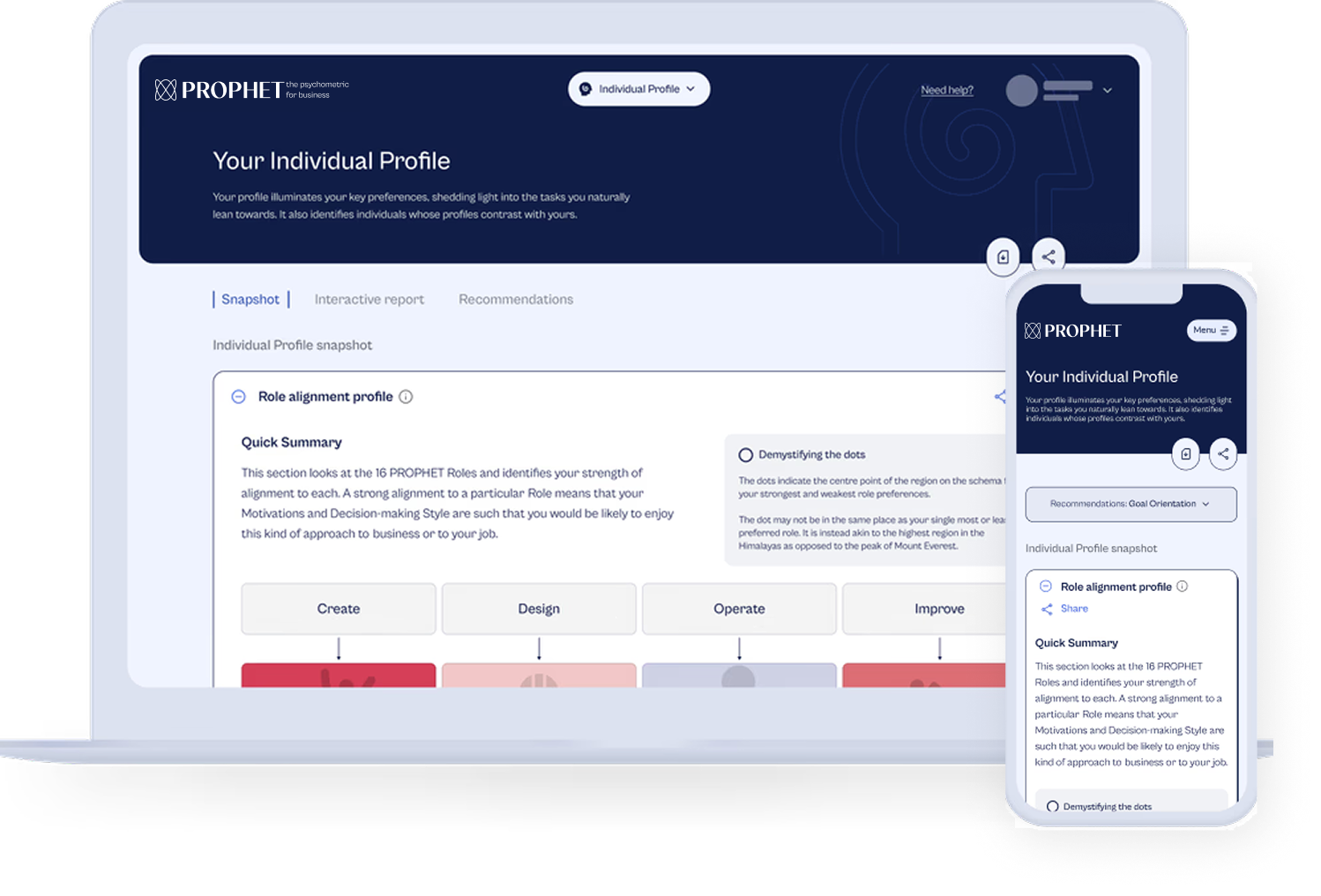
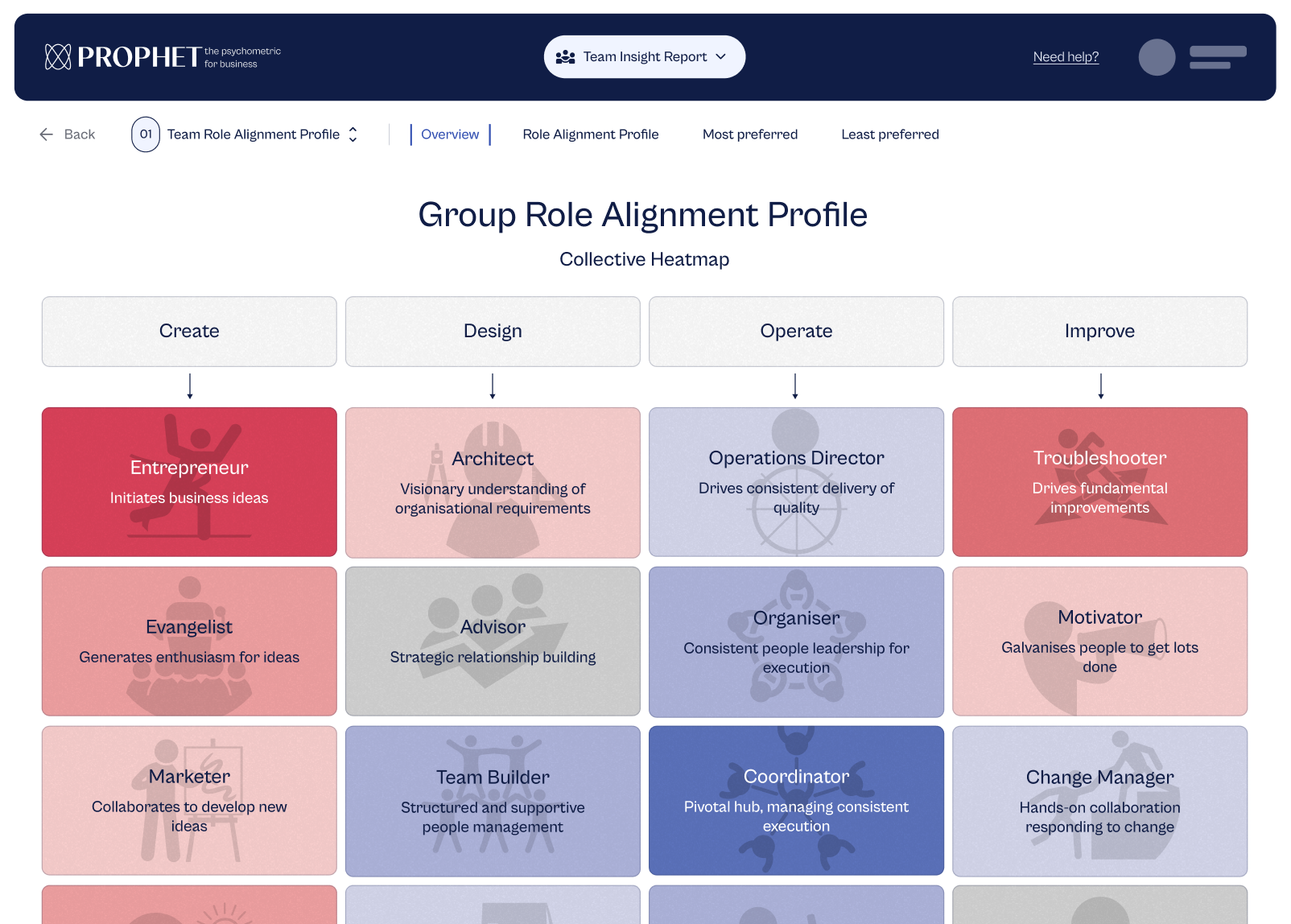
Consolidate teams' strengths, capabilities and behaviours for tangible results across your organisation. View and manage your employees' and team's reports from the PROPHET dashboard.
- Around 15 mins to complete per person
- 28 question validated psychometric
- Access all your organisations' reports on the secure, interactive site
- Downloadable detailed PROPHET Insight Reports
- Actionable insights and recommendations for all your teams
- Track your teams' progress over time
Available in: English, French, German, Italian, Portuguese & Spanish
The real value is in the team analysis and the ability to show how people interact and contribute to different business activities. PROPHET has added significant value to my organisation in terms of productivity and working relationships.
Jo CardwellManaging Director, Collateral and GWIM International Technology, Bank of America Merrill Lynch
To predict future macro and commodity trends for Rio Tinto's strategy and investment process, I need my team of highly technical and analytical economists and markets specialists to form strong relationships across Rio Tinto’s global businesses. PROPHET's insight helps us collaborate better within the team and outside of it. Its analytical and commercial methodology makes it easy to engage my department and informs decisions I take about the department.
Vivek TulpuleHead of Economics, Rio Tinto

PROPHET has had a profound impact on the business. It is a deeply insightful tool. More actionable and effective than other profiling tools. It has shaped how we form organisational relationships and interacted between the teams and key stakeholders.
Zachary LewyFounder and Executive Director, Arrow Global

The insight into Google's Creative Lab is absolutely fascinating. It's a wonderful report and very insightful. This gives a lot of insight into why our culture is persistently "uncomfortably exciting"! The report is amazing and it has got a lot of my team perfectly profiled.
TL UglowCreative Director, Creative Lab, Google
National Grid has valued the support over the last seven years, particularly in relation to our first Joint Venture in 25 years, ‘BritNed’. Their experience in the area of business relationships is combined with a commercial and pragmatic approach key in all aspects of business.
Steve HollidayFormer CEO, National Grid

The tool described each person very accurately and has enabled me to raise performance at both the individual and team level. I also used the team analysis to inform our recruitment process by looking for a strategic hire to fill a clear gap in the team dynamic. PROPHET has shown itself to be a powerful tool for providing insight which has led to improvements in both team cohesion and alignment in my organisation.
Richard RoseFormer Director of Controlling, RWE npower

PROPHET had been recommended by my Chair to help to drive team performance and collaboration across our senior team. Despite initial scepticism of how a profiling tool would help us, our team were impressed with the ease of use and the power of the solution. Both our Board and our MDs found the process enlightening and commercially applicable. Personally, I found the insight hugely helpful in my role as CEO and an effective tool in helping to get the best out of everyone in our senior team.
Andrew AdamsGlobal Head of Data & Analytics, Houlihan Lokey
Through introducing us to the PROPHET tool, our executive team coach has helped us gain new insights into how we harness the full diversity of our teams to lead the company through significant transformation.
Leanne WoodCHRO, Vodafone

We used PROPHET with our experienced Management Team of our London and South East Business. It helped a strong team develop new insights into each other and how they lead the business. We subsequently profiled 130 of our senior managers and ran team effectiveness workshops at the conference... It is a really good business insight tool that combines development of people and relationships with meaningful commercial insight.
Amanda WareHR Director, Skanska
Compare PROPHET to other providers
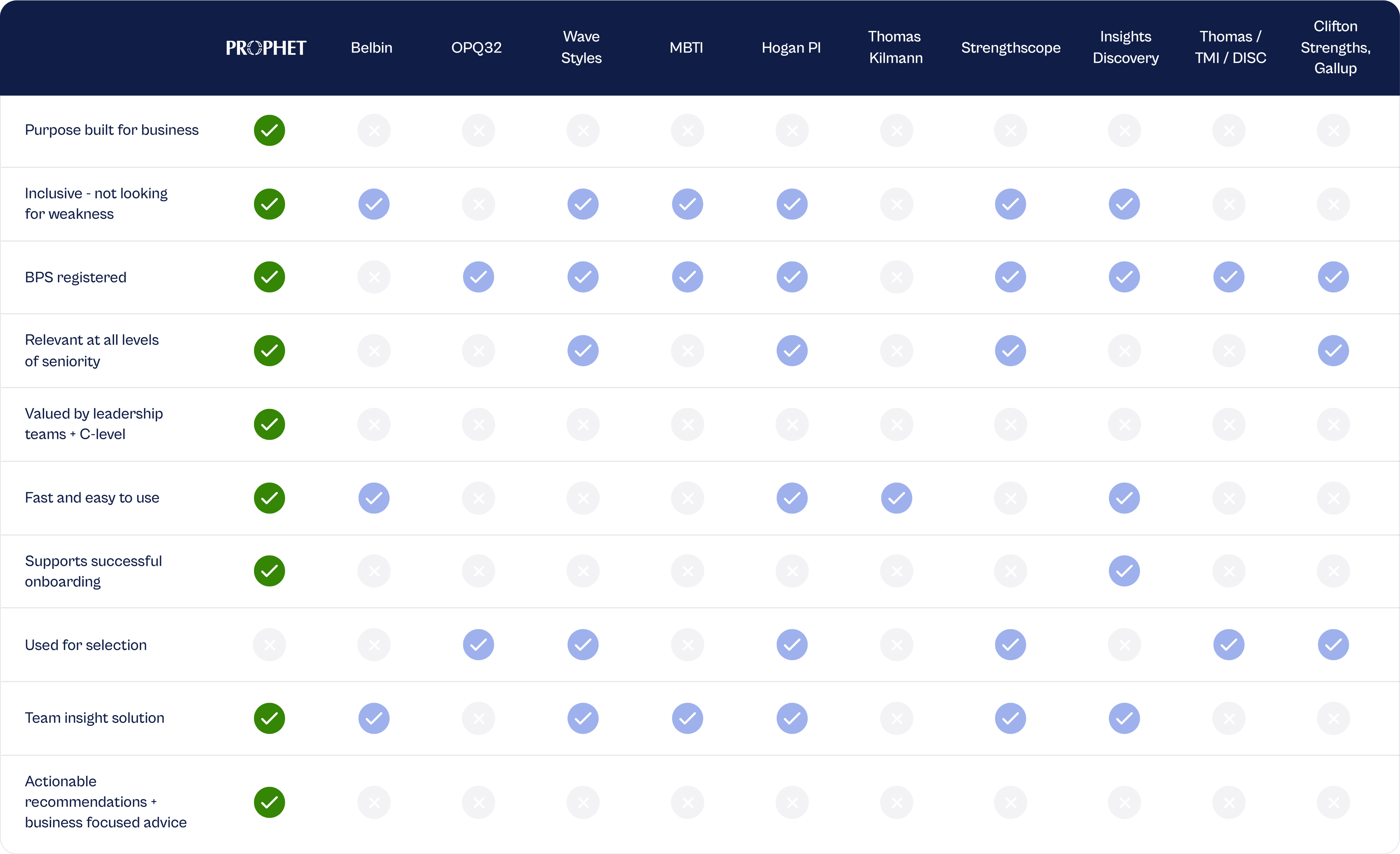
PROPHET has helped over 1,000 organisations and 40,000 individuals enhance team dynamics and collaboration.
Empower your team with insights to craft their own destiny with PROPHET today.
The insight into Google's Creative Lab is absolutely fascinating. It's a wonderful report and very insightful. This gives a lot of insight into why our culture is persistently "uncomfortably exciting"! The whole thing is uncanny. Wow. The report is amazing and it has got a lot of my team perfectly profiled. It is remarkable and really useful for any kind of personal development work. Thank you.
Tea UglowCreative Director, Creative Lab, Google
National Grid has valued the support over the last seven years, particularly in relation to our first Joint Venture in 25 years, 'BritNed'. Their experience is combined with a commercial and pragmatic approach key in all aspects of business.
Steve HollidayFormer CEO, National GridWe have accredited the HR team to derive the maximum from the profiles and we are using it every day in our talent lifecycle, as well as using it for senior hires. We are looking to roll it out across the Global business. It is an exceptional new tool – business focused, intuitive and provides remarkable business insights of great financial value. It is a vital solution for HR Directors to work with their CEOs on how to implement strategy. PROPHET has added value for all our teams and executives.
Michael CarterHR Director Europe, Assurant Inc
PROPHET has had a profound impact on the business. It is a deeply insightful tool. More actionable and effective than other profiling tools. It has shaped how we form organisational relationships and interacted between the teams and key stakeholders.
Zachary LewyFounder and Executive Director, Arrow Global Plc., Arrow Global Plc
To predict future macro and commodity trends for Rio Tinto's strategy and investment process, I need my team of highly technical and analytical economists and markets specialists to form strong relationships across Rio Tinto’s global businesses. PROPHET's insight helps us collaborate better within the team and outside of it. Its analytical and commercial methodology makes it easy to engage my department and informs decisions I take about the department.
Vivek TulpuleChief Economist, Rio Tinto, Rio Tinto
Begin transforming your team's potential today.