

In a world where the KPI is king, it’s natural to be sceptical of anything that sounds intangible or difficult to measure.
For some senior leaders, investing in internal team relationships can fall into that category, even while they prioritise developing external client and intermediary connections.
Yet decades of research in psychology, economics and organisational behaviour points to a different conclusion: building trust within your team increases focus, reduces friction and delivers significant long‑term commercial value.
This is not about being nice for the sake of it. It is about empowering your team to make better decisions and navigate complexity more effectively, while creating conditions in which they consistently perform at their best.
The payout for going long on relationships
Research consistently shows that conscious investment in a work relationship increases its perceived value. Importantly, this is particularly true for junior team members, who are much more likely to value support and care.
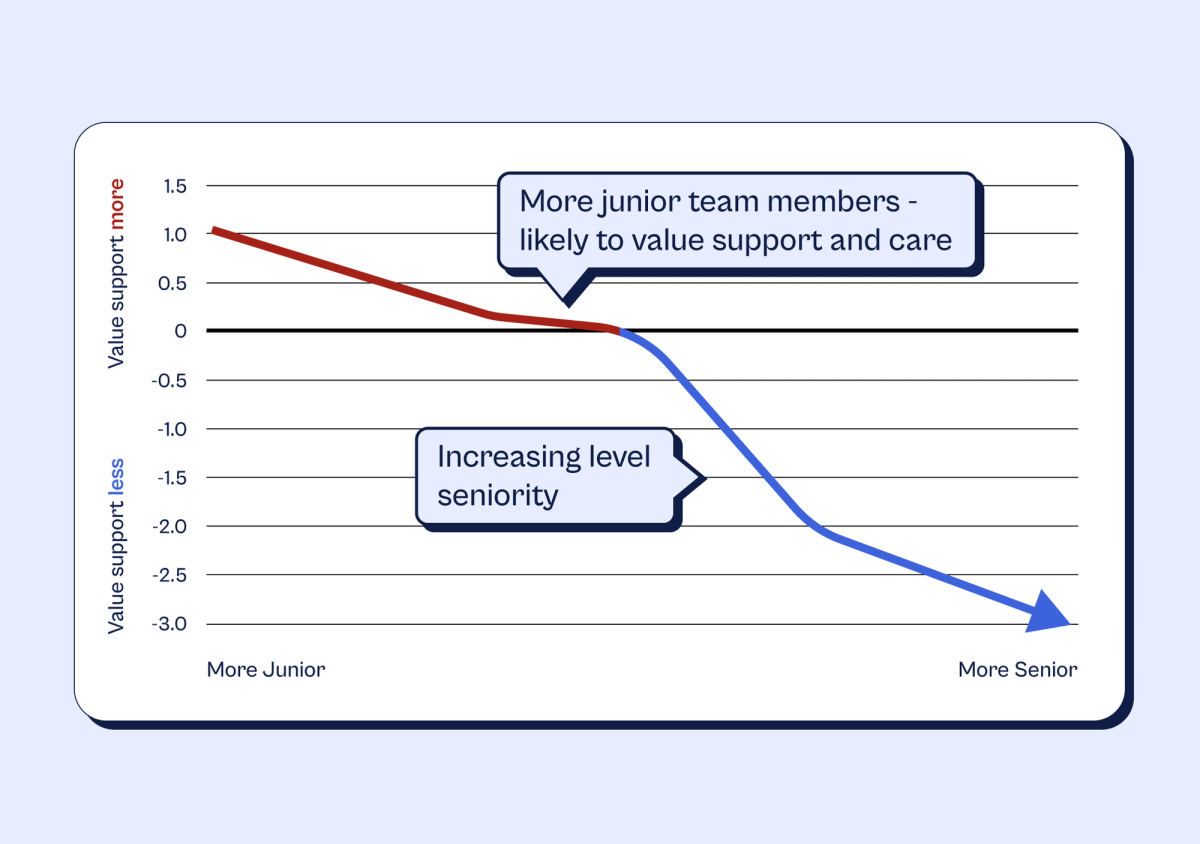
Saab (2007) found that the more highly a relationship is valued:
- The lower the likelihood of switching to an alternative role
- The greater the willingness to deepen or intensify the relationship further
In practical terms, when people value a relationship, they behave differently within it. They are:
- Less opportunistic
- Less inclined to exploit short‑term advantages
- More focused on collective outcomes rather than individual wins
This has a knock‑on effect on trust. As relationship value increases, tolerance increases as well. Team members become more willing to accept mistakes, misunderstandings or short‑term setbacks because the long‑term relationship matters more than the immediate issue.
For leaders, this means that investing time and attention into key team relationships is not a distraction from performance, it is a driver of it.
Why team trust matters even more than you might think
There is no contract, process or incentive scheme that can compensate for low trust within a team. Research in organisational psychology consistently shows that trust within teams is a critical predictor of performance.
Dirks and Ferrin (2001) found that trust in leadership and colleagues is associated with higher job performance, stronger commitment and lower turnover intentions. When trust is absent, people protect themselves rather than collaborate, increasing friction, duplication of effort and hidden costs.
Amy Edmondson’s work on psychological safety further demonstrates that teams with high levels of trust are more likely to speak up, admit mistakes and challenge assumptions. These behaviours are not “nice to have”; they are essential for learning, innovation and risk management. In low-trust teams, errors are hidden, decisions are delayed and problems escalate unnecessarily.
The consequences of weak internal relationships are tangible:
- Slower decision-making as people seek cover rather than clarity
- Increased conflict and misinterpretation of intent
- Reduced accountability masked as process compliance
- Higher burnout and attrition among high performers
Conversely, teams that invest in relationships build a shared understanding of how they work together under pressure. This reduces coordination costs and allows people to navigate ambiguity without constant escalation.
The implication is clear: internal trust is not a cultural issue to be delegated nor to be owned by a particular department, it is an operational priority. Teams with strong internal relationships execute faster, adapt better and absorb shocks more effectively than those relying solely on formal structures.
From theory to practice: where to start
Understanding the value of relationships is one thing. Acting on it is another.
PROPHET Profiling was created to help executives:
- See the value in others, even when working styles differ
- Understand how relationship dynamics shift across different phases of the business cycle
- Make deliberate, informed choices about how to engage, influence and collaborate
Rather than relying on intuition alone, PROPHET provides a shared language for discussing behaviour, motivation and trust, grounded in psychology but designed for real‑world decisions.
This is particularly powerful in environments where pressure is high, time is limited and misunderstandings are costly.
Practical tips for building trust in teams
Trust is not built through grand gestures. It is built through consistent, observable behaviour.
1. Show a human touch
Leaders who fail to show genuine care or interest in their teams gradually erode trust and loyalty. This does not mean oversharing or emotional displays; it means presence, curiosity and respect.
Small actions matter:
- Listening without immediately solving
- Acknowledging effort, not just outcomes
- Showing interest in how people work, not just what they deliver
2. Adapt to the team - don’t just expect them to adapt to you
Trust increases when leaders demonstrate that they understand their team and are willing to adapt their approach accordingly.
When a leader’s natural style differs significantly from the team’s dominant traits, misalignment can easily be misinterpreted as indifference or poor intent. PROPHET helps surface these differences early, providing a neutral language and framework for discussion.
Leaders who consciously adapt signal something powerful: “I am motivated by the group’s collective interest, not just my own preferences.”
3. Build trust deliberately during transitions
Trust is most fragile during periods of change, especially when new leaders are introduced.
PROPHET helps support the onboarding of new leaders by:
- Mapping team profiles
- Highlighting strengths, risks and pressure points
- Clarifying how different styles fit together
This accelerates understanding, reduces unnecessary friction and helps new leaders earn trust faster.
Investing in relationships: a strategic advantage, not a soft option
For team leaders facing tight deadlines, stretch targets and demands to demonstrate tangible progress, the question is simple: is this worth the time?
The evidence suggests it is. Organisations that invest in relationships benefit from:
- Lower conflict and escalation costs
- Faster decision‑making
- Greater resilience during uncertainty
- Stronger commitment from partners and teams
Trust is not a soft asset; it is a strategic one.
PROPHET exists to make that asset visible, measurable and actionable, so leaders can invest in relationships with the same rigour they apply to any other critical business decision.
To further your understanding of how to build trust in your team, fill out a contact form or visit our Team page.